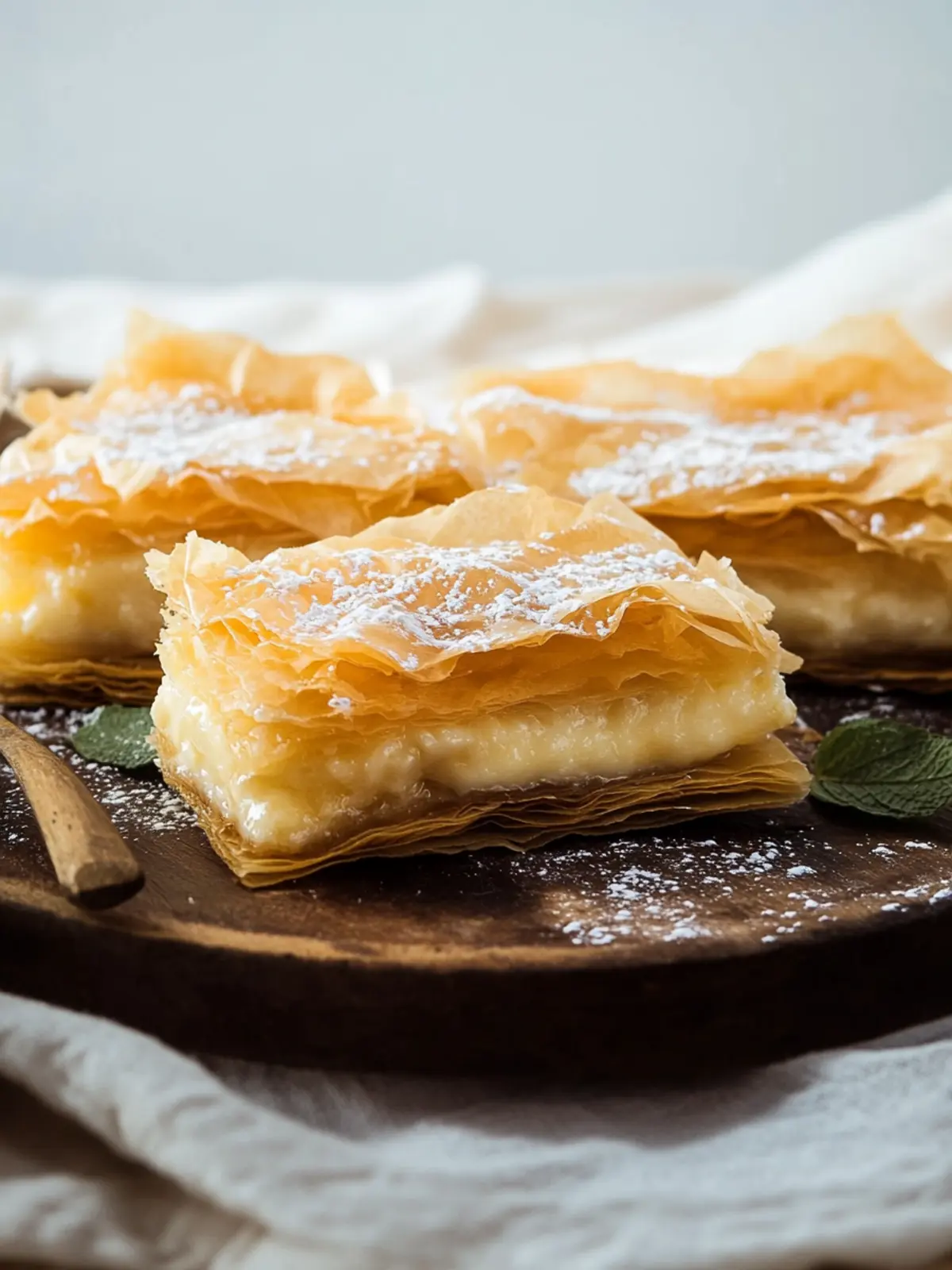
Imagine a crisp, golden shell shattering under your fork, revealing a warm, silken custard within, lightly dusted with cinnamon and icing sugar. This is the sublime experience of Greek bougatsa, a legendary pastry that captivates with its exquisite balance of textures and flavors. More than just a breakfast item, bougatsa is a culinary icon, deeply woven into the fabric of Greek culture, particularly in the northern city of Thessaloniki.
From its ancient roots to its modern-day popularity, bougatsa offers a taste of history with every delicate bite. Whether you’re savoring the classic sweet version with its creamy semolina filling or exploring its savory counterparts, this traditional Greek pastry is a testament to centuries of culinary evolution and regional innovation.
The Storied Past of Bougatsa: From Byzantium to Northern Greece
The journey of bougatsa is as rich and layered as the pastry itself, tracing its origins back to the illustrious Byzantine Empire. In the grand city of Constantinople (modern-day Istanbul), during the empire's final centuries, a type of stuffed pie known as pogatsa began to emerge. This early form reflected the diverse culinary influences of the Byzantine capital, blending local Greek traditions with flavors from across the Eastern Mediterranean.
The evolution of bougatsa was significantly shaped by Central Asian Turkic influences, particularly through the introduction of börek – a layered pastry brought by nomadic migrations and later adapted during Ottoman rule. As the Ottoman Empire expanded and incorporated former Byzantine lands, börek diversified into numerous regional variants. Bougatsa stands as a distinctly Greek adaptation, preserving the characteristic thin, flaky phyllo dough while infusing it with local tastes and techniques. This cultural and culinary fusion unfolded over centuries of vibrant exchange across the Balkans and Anatolia, where Ottoman practices subtly permeated Greek communities.
By the late 19th century, bougatsa had firmly established itself in Ottoman Thessaloniki. Historical records indicate the first documented bougatsa shop license was issued in Thessaloniki in 1896 to "Dodoni," followed by the formation of a makers' union in 1914 with 42 members. However, its widespread popularization truly accelerated after the 1922 population exchange between Greece and Turkey. Over a million Greek refugees from Asia Minor and Cappadocia resettled in northern regions like Thessaloniki and Serres, bringing with them a wealth of culinary traditions. These refugees significantly boosted the pastry's profile, opening more shops and integrating bougatsa into local bakeries as a comforting staple for their displaced communities. In Serres, it quickly gained prominence, spreading further in Thessaloniki, where it became emblematic of refugee resilience and culinary heritage.
Initially, bougatsa was often referred to as the "pita of the poor" – an affordable, simple dough favored by laborers. Yet, through refined phyllo techniques and an increasing variety of fillings, it transformed into the sophisticated pastry we cherish today. To dive deeper into its historical journey, explore Bougatsa's Journey: Byzantine Origins to Greek Breakfast Staple.
The Anatomy of Authentic Bougatsa: Flaky Phyllo, Creamy Custard
At its heart, bougatsa is a masterful interplay of contrasting textures and harmonious flavors. The sweet version, undeniably the most famous, showcases two primary components:
- The Phyllo Dough: The hallmark of bougatsa is its incredibly thin, delicate, and often hand-stretched phyllo. Unlike typical store-bought phyllo used in many Greek pies, traditional bougatsa phyllo is often prepared fresh by skilled artisans. These multiple layers, brushed with butter or olive oil, bake into an irresistibly crispy and flaky golden crust that shatters with every bite, creating a delightful crackle that is signature to a well-made bougatsa.
- The Creamy Custard: Encased within the phyllo layers is a luscious semolina-based custard. This filling is prepared by cooking semolina with milk, sugar, and often eggs, until it thickens into a rich, velvety consistency. What often elevates this custard is the fragrant addition of orange zest, which infuses the creamy interior with a bright, citrusy perfume that cuts through the richness beautifully.
Once baked to golden perfection, the sweet bougatsa is typically cut into squares or triangles, then generously dusted with a snow-like layer of icing sugar and a sprinkle of aromatic cinnamon. This final touch not only adds visual appeal but also enhances the flavor profile, marrying the sweet, creamy, and spicy notes into a truly iconic taste.
Beyond Sweet: Exploring Savory Bougatsa Varieties
While the creamy custard bougatsa reigns supreme in popularity, it’s important to acknowledge the delicious savory versions that offer an entirely different culinary experience. In Greece, you can also find bougatsa filled with:
- Cheese (Tyropita Bougatsa): A popular choice featuring a tangy, savory filling typically made with a blend of Greek cheeses like feta and myzithra, sometimes combined with herbs.
- Minced Meat (Kreatopita Bougatsa): A hearty and satisfying option, often filled with seasoned ground beef or lamb, sometimes mixed with onions and spices.
These savory variants demonstrate the versatility of bougatsa, proving it’s far more than just a dessert. They are equally beloved as quick meals or substantial snacks, reflecting the pastry’s adaptability to various palates and times of day.
Bougatsa in Modern Greek Culture: A Morning Ritual
Today, bougatsa remains an undeniable culinary symbol, especially in Northern Greece. In Thessaloniki, it’s not just food; it’s an institution. The city is renowned for its specialized bougatsa shops, known as bougatsadika, which typically open early in the morning, filling the streets with the irresistible aroma of freshly baked pastry.
For many Greeks, particularly those in Thessaloniki, starting the day with a warm, freshly prepared bougatsa is a cherished ritual. It’s the ultimate comfort food for breakfast or a satisfying midday snack, often enjoyed with a strong Greek coffee. The experience of biting into a warm piece, the phyllo crunching and the steam escaping from the creamy center, is an essential part of the Greek morning routine.
These specialized bougatsa shops are a vibrant part of the local culture, often featuring bakers skillfully stretching the phyllo dough by hand in an almost theatrical display, a testament to the craft and tradition behind this beloved pastry. The freshness is paramount, and bougatsa is always best enjoyed straight from the oven.
To understand the depth of its cultural significance in Thessaloniki, read Thessaloniki's Bougatsa: Why This Greek Pastry is a Morning Must-Have.
Tips for Enjoying and Appreciating Authentic Bougatsa
If you're looking to truly savor the bougatsa experience, here are a few insights:
- Seek out Authenticity: The best bougatsa comes from dedicated bougatsadika or bakeries known for their fresh preparation. Look for places where you can see the phyllo being worked or where the aroma of fresh pastry is strong.
- Always Enjoy Warm: Bougatsa is meant to be eaten warm, ideally just moments after it’s baked. The heat enhances the creaminess of the custard and the crispness of the phyllo, creating that perfect textural contrast.
- Traditional Toppings: For the sweet version, don't skip the icing sugar and cinnamon. They are not merely garnishes but integral parts of the classic flavor profile.
- Pair with Coffee: A traditional Greek coffee, a strong espresso, or even a glass of milk makes an excellent accompaniment, especially when enjoyed as breakfast.
- Observe the Craft: If you ever have the chance to see bougatsa being made, take a moment to appreciate the skill involved in hand-stretching the phyllo dough to such incredible thinness. It's a labor of love that speaks to the pastry's heritage.
Greek bougatsa is more than just a pastry; it's a testament to culinary heritage, a symbol of resilience, and a comforting staple that brings joy with every flaky, creamy bite. Its journey from Byzantine courts to the bustling streets of Thessaloniki is a story of adaptation, tradition, and enduring flavor. Whether you discover it in Greece or recreate its magic at home, bougatsa offers an unforgettable taste of Greek culinary excellence, inviting you to partake in a tradition that continues to delight generations.
